Oostvoornse Meer
OVM 10: a seventeenth-century wreck in the Oostvoornse Meer
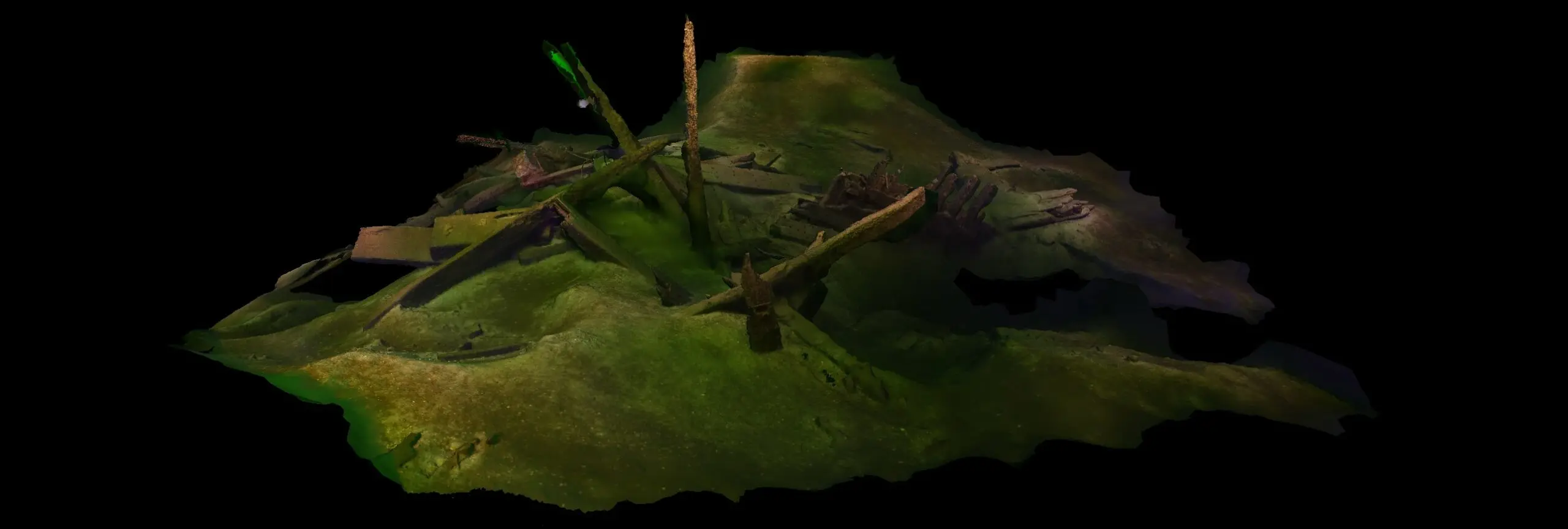
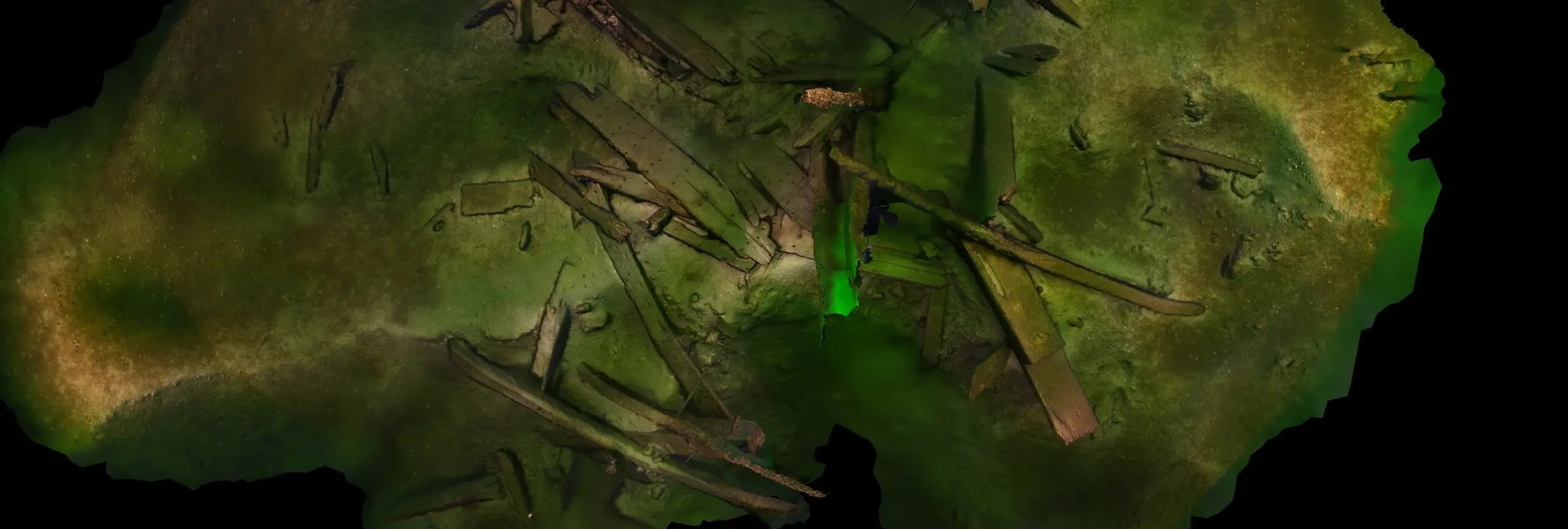
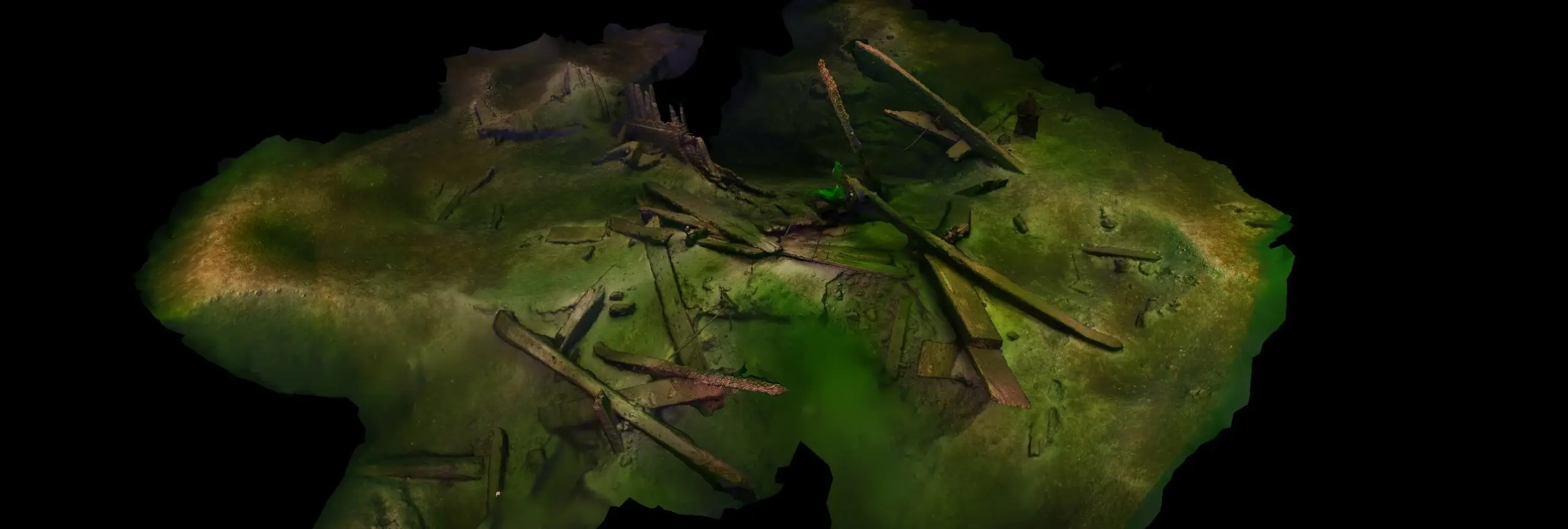
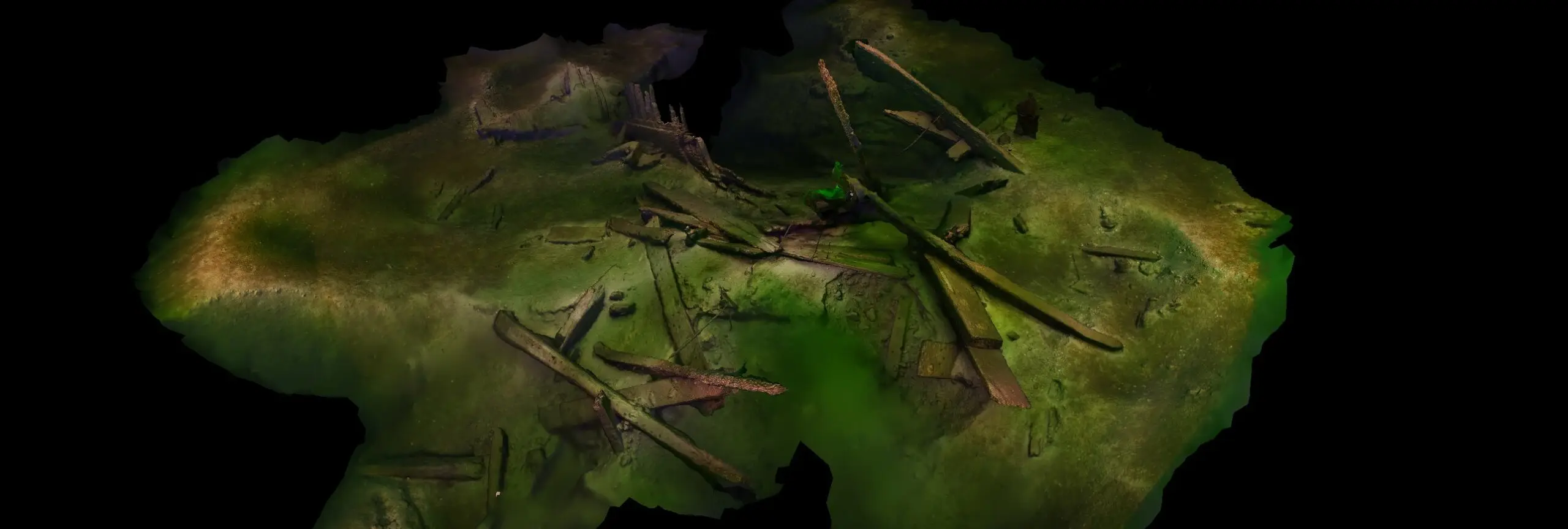
The OVM 10 wreck lies in two parts on a rise in the bottom of the Oostvoornse Meer, some twenty metres apart, possibly two vessels rather than one.
- Area
- Oostvoornse Meer
- Region
- South Holland
- Type
- Wreck
The Oostvoornse Meer was formed in the 1960s by the Brielse Maasdam and the Brielse Gatdam, part of the large water management works around Rotterdam. Once the area was closed off, sand was dredged from the lake for the construction of the Maasvlakte.
That dredging exposed a great many wrecks. The waterway had covered and preserved them for centuries, but changes to the water regime and the removal of sand damaged or destroyed a number of them. Some lie fully exposed, which made the area attractive to sport divers and to illegal excavation. A further threat to the wooden hulls is the shipworm Teredo navalis. Closing the lake made the water fresher, but since 2007 the salinity has been deliberately restored, and the worm is active again.
From the late Middle Ages this was a busy route. The lake holds the remains of more than twelve vessels from the sixteenth to the twentieth century, most from the early seventeenth — probably explained by a treacherous sandbank marked on a 1645 chart as the Hondenplaat.
OVM 10
One of the wrecks found in the lake is known as OVM 10, a seventeenth-century wooden vessel. The layout of the site suggests there may be two wrecks lying alongside each other, but that has not been confirmed.
Survey and condition
In 2014 an inspection dive was made on several wrecks in the lake, OVM 10 among them. The site consists of two separate parts, divided by a rise in the bottom, with roughly twenty metres between the eastern and western find. The dive recorded numerous loose ship components, including thin hull planking and heavy beams. The outer faces of the beams showed shipworm damage while the interiors were still largely sound.
Images